
Percolation testing before installing any drainage field is essential. If you need a new septic tank or drainage field, one of the most important steps is also one of the most overlooked: percolation testing.
It might sound technical, but it is simply a way of checking whether your ground can safely absorb waste water. Skip it, and you risk system failure, costly repairs, and problems with compliance.
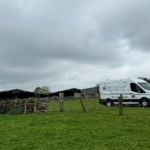
We recently saw exactly why this matters on a property in Devon.
A real example: when things go wrong
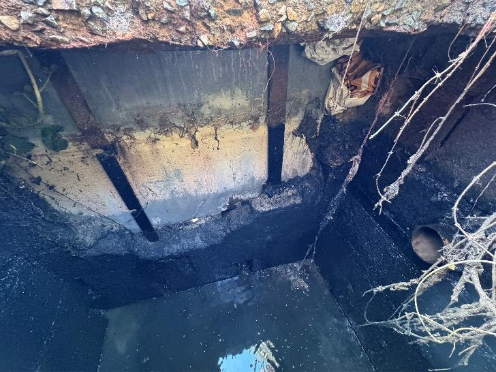
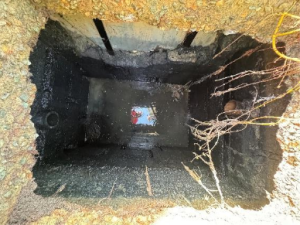
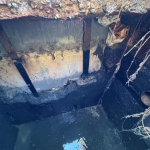
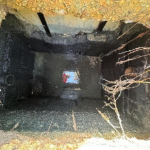
We were asked to inspect a septic tank that had been damaged after a tractor passed too close to it. The pressure caused part of the concrete wall to collapse, leaving the tank beyond repair.
The only realistic option was to replace it with a new, correctly sized plastic septic tank.
During the inspection, we also found another issue. The existing drainage field was backing up. This is a clear sign that it had failed and was no longer doing its job.
Once a drainage field reaches this point, it cannot be repaired. It has to be replaced.
That is where percolation testing becomes essential.
What is a percolation test?
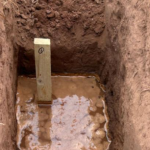
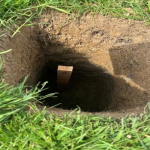
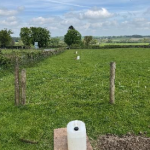
A percolation test measures how quickly water drains through the soil on your property.
In simple terms, it answers one key question:
Can the ground absorb waste water safely, and at the right rate?
This information is used to design a drainage field that will work properly over the long term.
Why percolation testing matters
Percolation testing is not just a box to tick. It is a critical part of designing a drainage system that works and meets current regulations.
It allows us to:
- Get the sizing right
- If the soil drains too slowly, the system will become overloaded and back up.
- If it drains too quickly, waste water may not be properly treated before entering the ground.
- The test results tell us exactly how large the drainage field needs to be to work correctly.
- Check if the ground is suitable
Not all soil types are suitable for a drainage field. Heavy clay may drain too slowly, while very loose ground may allow waste water to pass through too quickly. - Without testing, there is no way to make an informed decision.
- Meet the General Binding Rules
- Current regulations require drainage systems to be designed correctly and to avoid pollution risks. Percolation testing provides the evidence needed to show that your system meets these requirements.
- Obtain Building Control approval
Building Control will usually require evidence that a drainage field has been properly designed. Percolation test results form a key part of that process.
What happens if the ground fails the test?
Sometimes, the results show that the soil is not suitable for a standard drainage field.
In those cases, alternative solutions have to be considered.
These might include:
- A different type of drainage design
- Relocating the system to another part of the site
- In some situations, discharging treated water to a watercourse
However, not every option is available on every property.
In the case we looked at, there was no nearby watercourse. That meant a drainage field was the only viable solution, making the percolation test even more important.
- A positive result and a clear next step
- Fortunately, in this instance, the test results were good.
- The soil conditions were suitable for a new drainage field, which meant we could move forward with confidence.
We were then able to prepare a clear quotation covering:
- Replacement septic tank
- Correctly sized drainage field
- Full installation based on tested ground conditions
This gives the home or landowner peace of mind that the system will work properly and meet current standards.
The risks of skipping percolation testing
It is surprising how often drainage fields are installed without proper testing.
This usually happens when:
- Work is rushed
- Assumptions are made about the soil
- Older systems are replaced like for like without reassessment
The risks are significant.
Compliance issues
- Without test results, it is very difficult to demonstrate that the system meets current regulations.
- Building Control problems
- Approval may be delayed or refused if there is no evidence to support the design.
System failure
A drainage field that is not suited to the ground will often fail early. This can lead to:
- Backing up drains
- Surface water issues
- Foul smells
- Health and environmental risks
Costly future work
Fixing a failed system is almost always more expensive than getting it right first time. In many cases, it means starting again with a completely new design.
A long term investment
A drainage field is not a small or short term piece of work. It is part of your property’s core infrastructure and is expected to last for many years.
Percolation testing ensures that:
- The system is designed for your specific ground conditions
- It performs reliably over time
- It meets legal requirements
- You avoid unnecessary future costs
The bottom line
Percolation testing may seem like an extra step, but it is one of the most important parts of installing any drainage field.
It provides the information needed to design a system that works properly, meets regulations, and lasts.
Skipping it can lead to avoidable problems, failed systems and expensive remedial work.
Getting it done properly from the start gives you confidence that everything beneath the surface is working exactly as it should.
If you are planning a new septic tank or drainage field, we can carry out percolation testing and advise on the best solution for your property. Get in touch to discuss your site.